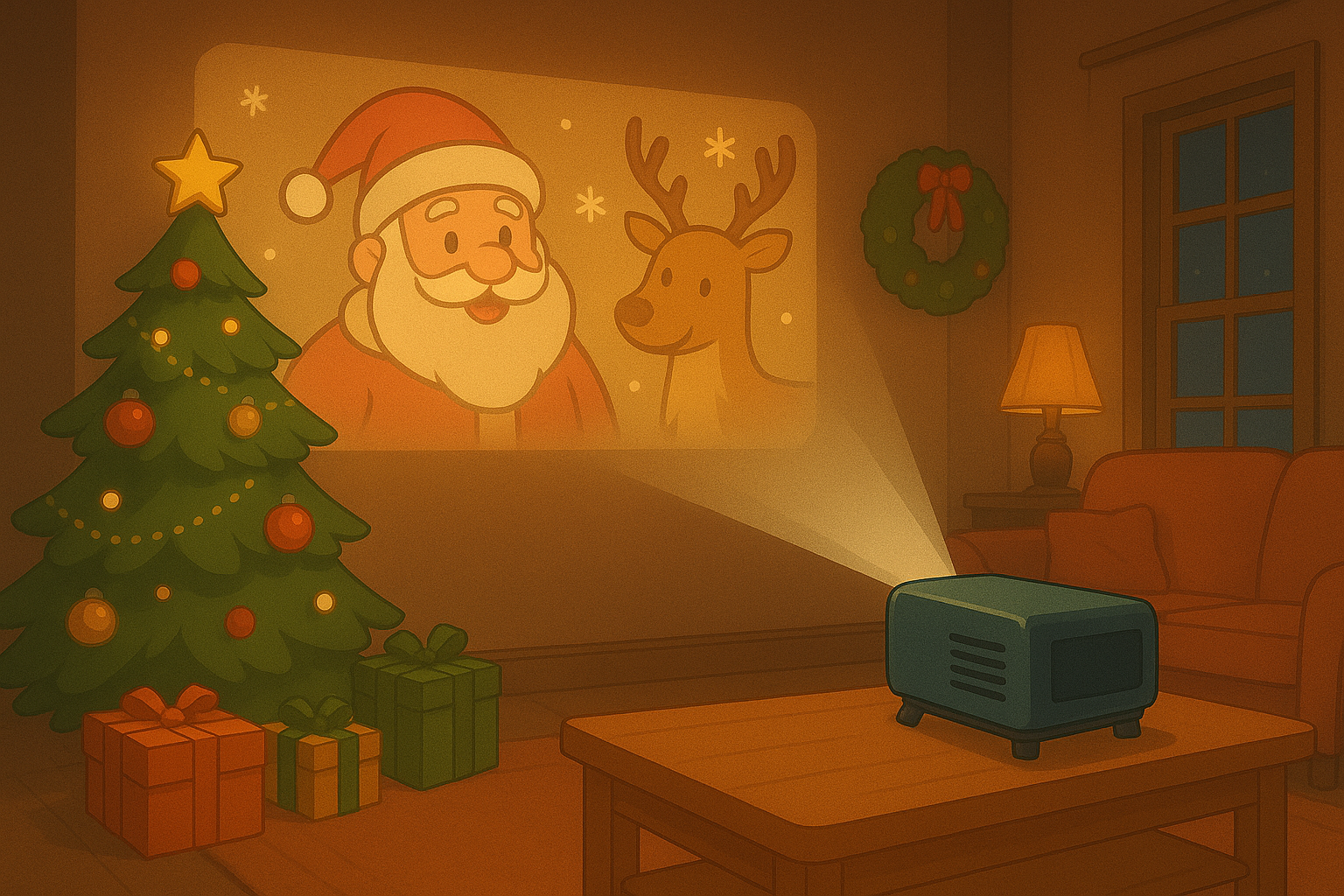
Christmas projection: How to light up your Singapore home and tell a festive story
Living in Singapore means working with compact living areas and a love for clever solutions. Many folks want holiday magic without massive outdoor displays. Projections fit that need perfectly. They are tidy, quick to change, and often plug-and-play. You can switch from soft snowfall to bright story scenes in seconds. The glow spills gently into a room and invites smiles. It is a cozy, modern way to celebrate. Below I walk you through why projections feel so emotional, how they work, and how you can set them up at home.
Why light projections feel like holiday magic
Christmas projection brings motion to static decor, and humans respond to motion. Light that moves tells a tiny story. A drifting snowflake has a rhythm. A twinkling star has timing. Those elements trigger memories. You recall past celebrations and warm moments. The emotion is immediate and gentle. The effect works because light paints with time, not just space. Soft fades and slow pans invite you to slow down. Short loops surprise you with a new detail now and then. That keeps attention in a relaxed way. In small spaces, projection avoids clutter. Instead of many ornaments, you get layers of mood. This can make your living room feel larger and more playful. It also suits Singapore’s humidity and wind, where outdoor setups can be tricky. Indoors, you control the scene, the sound, and the angle. Guests feel welcomed. Kids find a new kind of wonder. And picture moments come alive for your phone or camera.
How projections work — the simple tech behind the glow
Christmas projection uses a light source and an image engine to paint on a surface. Projectors vary in size from tiny puck lights to full AV boxes. Most home models use LED light and have built-in looping content. They read a video file and throw it in realtime. The surface you project on matters. A white wall gives the clearest image. A sheer curtain gives a softer look. A window gives layered reflections and depth. Distance affects size and brightness. Move the projector closer for a brighter, sharper image on a small wall. Move it back to cover a larger area, but expect dimmer light. Ambient light plays a role too. Turn off harsh lamps for clearer colors. Many devices have keystone and focus controls to fix shape problems. You can connect the projector to a phone or USB stick for custom clips. Loop time and motion speed are key creative choices. Short, gentle loops keep the mood steady. Faster loops can energize a party. Also think about audio. Subtle music adds warmth, but loud sound can overpower. In Singapore flats, a balance is best. Finally, safety is simple: secure the device and keep ventilation clear. Most modern units run cool and safely for long holiday nights.
Simple setups for living rooms, windows, and cozy corners
Christmas projection fits many spots in a home. Start with a living room wall behind the sofa. The wall becomes your main stage. Place the projector on a shelf or small table behind the seating line. Aim low for a wraparound feel. A window setup adds magic for passersby and neighbors. Project from inside onto the glass so light faces out. This gives depth and reflection. Use translucent curtains to soften the image. Balconies and sliding glass doors are great too. Small units work well on mantels or bookshelves. Ceiling mounts give a cine-like view and cover more floor area. For kids, a corner scene near the floor turns the space into a play area. Choose low-brightness, warm tones for bedtime projection. For party mode, switch to brighter, saturated colors and faster motion. You can mix static string lights with moving scenes for a layered effect. Try pairing a slow snowfall projection with warm fairy lights. That contrast creates a handcrafted vibe. Also experiment with placement height and angle. A tiny shift can fix awkward shadows or sharpen details. And remember to check for glare on glossy surfaces like TVs and glass cabinets. You want the projection to add, not fight, your room’s existing elements.
Design tips: color, motion, and telling a little story
Christmas projection works best when you think like a director. Pick one mood and build around it. Start with a color palette. Warm ambers and deep greens feel cozy. Cool blues and soft whites feel wintry. Limit the palette to two or three dominant tones for a clear message. Next, choose motion speed. Slow pans feel dreamy. Quick twinkles feel festive. Use loops that have a clear start and end, so the repeat feels smooth. Story-wise, imagine a simple arc. Snow begins. A sleigh crosses. Lights blink on a house. These beats give your viewers a sense of progression. Layering helps too. Put a slow sky loop behind sharper foreground silhouettes. That depth makes the scene richer. Text and icons can work but use them sparingly. A short greeting or a single symbol keeps the focus on mood. If you want a narrative, keep it under 30 seconds so attention stays high. Also test at night and in the evening. Colors shift under different ambient lights. What reads as bright at dusk may wash out by night. Lastly, add small props like garlands or a centerpiece that echo the projection colors. That ties the virtual and the physical together and amplifies the emotional effect.
Practical gear guide and tips for Singapore homes
Christmas projection is easy to get started with. For compact spaces, a mini LED projector is ideal. These are affordable and quiet. Choose one with native 720p or 1080p for crisp visuals on small walls. Battery-powered models add flexibility for balconies and pop-up scenes. Look for models with HDMI and USB inputs so you can use different sources. For content, there are many ready-made clips online, or you can create short videos on your phone. Clip length and loop smoothness matter more than file size. If you live in a condo, check building rules for exterior-facing displays. Many neighbors love the light, but some spaces have restrictions. Place the projector on a stable surface and secure cords to avoid trips. Use gentle mounts or adhesive hooks for a clean look. For power, use a long, neat cable and consider a surge protector. In Singapore’s climate, keep electronics away from damp balconies. Finally, try a test run a few days before a gathering. Adjust angles, check brightness, and take a few photos to see how it reads on camera. And remember this small tip: Christmas projection is about feeling. Keep scenes simple, keep motion smooth, and let the light do the storytelling. It will make your place feel warm, playful, and a little bit magical.
Popular projections